
On this page10 sections
PCSing to the Pensacola area? Share your reporting destination, timeline and comfortable housing budget so we can build a focused home search.

To buy a condo with a VA loan in Pensacola or anywhere on the Emerald Coast, the entire condominium project must be VA-approved before any unit in it is eligible for a VA guaranty.
You can check any project's status yourself, free, in the VA's condo report tool at lgy.va.gov/lgyhub/condo-report, and if the building is not listed, your lender can submit the project to the VA for approval. That one rule drives everything else on this page.
Key Facts (as of July 2026)
- Under VA Pamphlet 26-7 (Lenders Handbook), Chapter 16, condominium projects (but not PUDs) must be VA-approved before any unit in the project is eligible for VA loan guaranty.
- The VA's free public lookup, the Request a Customized Condo Report tool at lgy.va.gov/lgyhub/condo-report, lets you search any Florida project by name or VA condo ID and returns 1 of 7 statuses.
- Since December 7, 2009, the VA no longer accepts HUD/FHA condo approvals in lieu of its own review; projects grandfathered before that date show as HUD Accepted.
- Per 38 CFR 36.4350, a project fails VA review if it has a right of first refusal, a buyer/tenant approval requirement, unreasonable leasing restrictions, or any minimum lease term over 1 year.
- The only VA-published review timeline is from its April 2016 lender training: complete condo packages were then normally reviewed in about 2 to 3 weeks (a dated figure, not a current promise).
- The approval package requires roughly 10 document types, including the declaration, bylaws, HOA budget and financials, the last 2 HOA meeting minutes, and litigation/special-assessment statements.
Yes, the Condo Project Itself Must Be VA-Approved, Not Just You
Most VA buyers assume eligibility is about them: the Certificate of Eligibility, the entitlement, the funding fee. On a single-family house in Navarre or Pace, that is true. On a condo, there is a second gate.
The VA Lenders Handbook (Pamphlet 26-7), Chapter 16, is blunt about it: condominium projects must be approved by the VA before any units in the project are eligible for VA loan guaranty. The VA's own consumer page for the purchase loan lists the benefit as the ability to buy a condo in a VA-approved project, not "buy any condo."
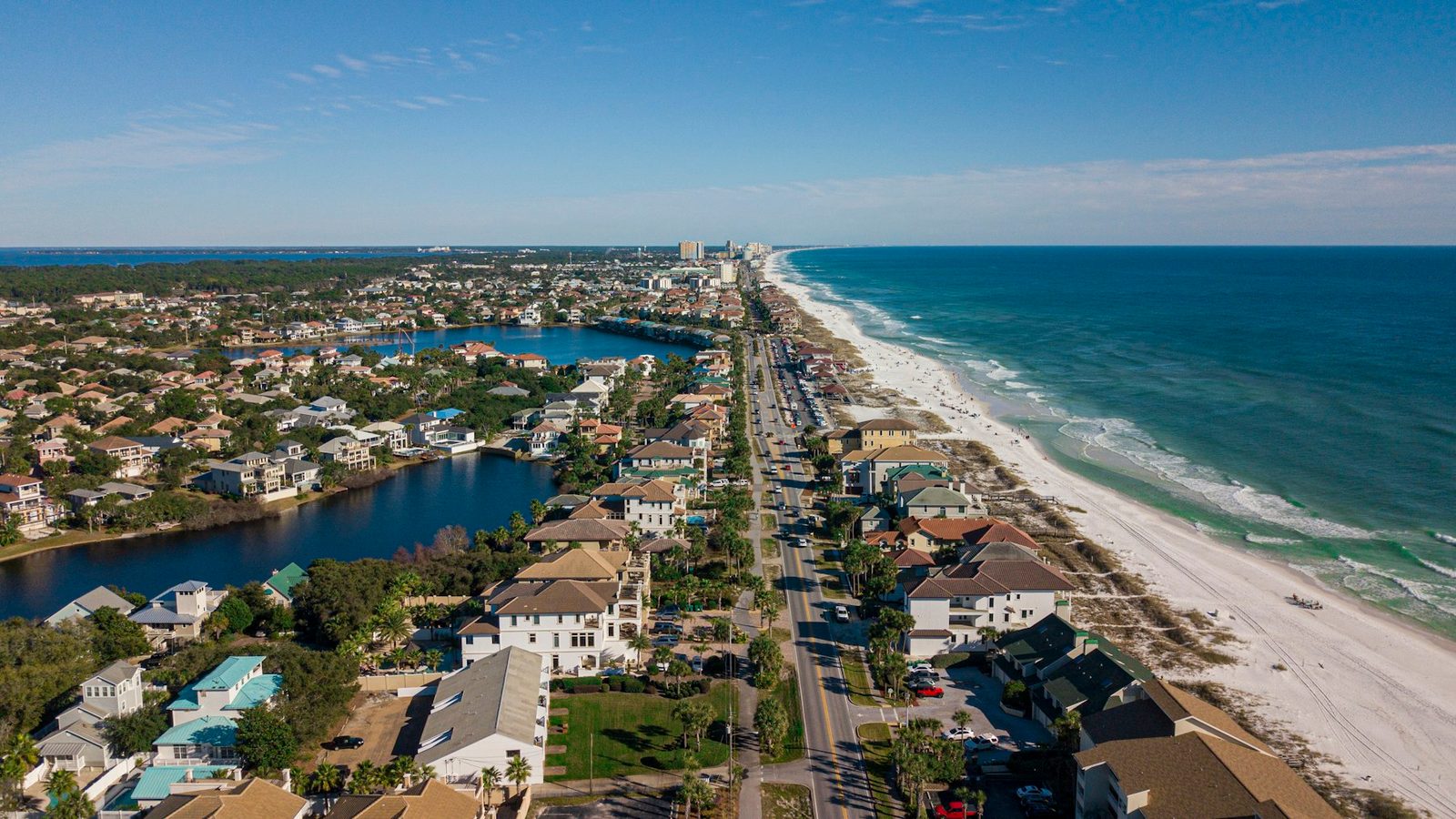
Note the carve-out: planned unit developments (PUDs), think townhome communities with an HOA but fee-simple lots, do not require this project approval. The rule bites specifically on condominium ownership, which is exactly what dominates the waterfront from Perdido Key to Destin.
Practical consequence: before you write an offer on any condo, verify the project. Your personal eligibility can be perfect and the deal still dies at the building level. While the project is being checked, get your own paperwork squared away: the VA Certificate of Eligibility walkthrough covers how to pull your COE in minutes so you are not running two approvals in series.
How to Check Any Condo in the VA Database: Step by Step
The VA's Loan Guaranty (LGY) Hub hosts a free public lookup called the Request a Customized Condo Report. Anyone can run it: you do not need a lender login. Here is the drill:
- Go to lgy.va.gov/lgyhub/condo-report. The page is a JavaScript app, so results cannot be bookmarked or deep-linked: you run the search live each time.
- Select the state: Florida.
- Enter the condo's name or VA condo ID. Use the project's legal name from the listing or the county record. Marketing names and legal names often differ, and a miss on the name is the number-one reason buyers wrongly conclude a building is unapproved.
- Read the status on the report. The status, not the mere presence of a record, is what matters (table below).
- Have your lender confirm in WebLGY. Lenders see the same database from the inside (Loan > Condo > Search Condos) and can pull any conditions attached to an approval.
Run this before you order an appraisal and before you go under contract. It costs nothing and takes two minutes; skipping it can cost you an appraisal fee and a dead escrow.
What the Statuses Mean
| VA Status | VA Financing? | What It Means for You |
|---|---|---|
| Accepted Without Conditions | Yes | The clean green light. Any unit in the project is eligible for VA guaranty. |
| Accepted With Conditions | Yes, with cleanup | Approved, but the listed conditions (e.g., document recording, completion items) must be satisfied before an individual loan is guaranteed. |
| HUD Accepted | Yes | Grandfathered: the VA accepted the project based on FHA approval before December 7, 2009 and it remains acceptable. |
| Pending | Not yet | A package is under VA review. Ask your lender for status and build time into the contract. |
| Suspended | No | The VA stopped processing (usually an incomplete package). Processing resumes when the missing items arrive. |
| Rejected | No | The VA reviewed the project and declined it. Plan on the conventional route unless the project documents change. |
| Unknown | Not yet | No usable VA record. The project needs a full submission before any VA loan can close there. |
Statuses per the VA's Condominium Approval Process lender training presentation. Verify live at lgy.va.gov/lgyhub/condo-report.
Short on time? Text me the building.
Send me the condo or building name and I will pull its current status from the VA database and tell you whether it is a fit for your loan, usually the same day. VA project approvals expire and get reinstated, so it is worth a 30-second text before you fall for a specific unit.
What the VA Actually Reviews Before Approving a Project
VA condo approval is a legal-document and HOA-health review, not a walk-through. Per Chapter 16 and the VA's lender training materials, the required package includes:
- the declaration (CC&Rs)
- bylaws
- articles of incorporation and any amendments
- rules and regulations
- the HOA budget and financial statements
- the minutes of the last two HOA meetings
- a statement of any pending litigation and special assessments
Lenders assemble and upload all of it in WebLGY as condo correspondence, along with items like the plat map and a presale letter, per the VA's Condo Approval for Lenders quick reference guide.
Two of those items deserve your attention as a buyer, because they are exactly where Gulf Coast buildings stumble: litigation and special assessments. A building in active construction-defect litigation, or one levying a heavy assessment after a storm, has to disclose it in the package, and the same facts that complicate VA review should inform your own decision to buy in.
The VA also requires, under 38 USC 3703(d)(3) as implemented in Chapter 16, that HOA assessment liens be subordinate to the VA-guaranteed first mortgage.
One accelerant worth knowing: Chapter 16 encourages an attorney's opinion letter stating that the project's documents meet VA requirements. It expedites approval by reducing how much of the document stack the VA itself has to read.
Deal-Breaker Restrictions: First Refusal, Buyer Approval, Long Minimum Leases
Chapter 16's Exhibit A implements 38 CFR 36.4350, the VA regulation on restrictions on alienation, legalese for "rules that limit your right to sell or lease your own unit." A condominium project must not have any of these, and each one is common in older Florida condo documents:
- A right of first refusal: the association gets first crack at buying any unit before an outside buyer can.
- A right of prior approval: the HOA must approve your prospective purchaser or tenant.
- Leasing restrictions that unreasonably restrict use and occupancy of the unit.
- Any minimum lease term longer than 1 year.
If the condo documents contain one of these clauses, the project cannot pass VA review as written. Some associations amend their documents to remove offending clauses, but that is an HOA vote and a recorded amendment, not something your lender can fix inside a 30-day financing contingency.
When I pull condo docs on a Pensacola-area building for a VA buyer, this list is the first thing I check, because it tells us within a day whether VA financing is realistic or whether we pivot immediately.
Condo Not on the List? How Your Lender Requests VA Approval
An unlisted or Unknown project is not automatically a dead deal. Chapter 16 (section 16-A.02) lays out the path: the lender or sponsor sends a written request for VA approval plus a copy of the condominium's organizational documents to the VA Office of Jurisdiction. The VA reviews the package for compliance with its regulations and notifies the requester of the decision. In practice your lender does this through WebLGY, creating the condo record and uploading the full document package.
Three realities to plan around:
- Timeline is unguaranteed. The only figure the VA has published came from its April 2016 lender training: complete packages were then normally reviewed in about 2 to 3 weeks, down from 1 to 6 months in earlier years. Treat that as historical context, not a current service standard, and build a generous financing contingency into the contract.
- Incomplete packages stall, not fail. The VA suspends processing until missing or unrecorded items arrive, which is why a cooperative HOA that produces documents quickly is half the battle.
- Approval can come with strings. The VA's approval notice may carry special conditions (recording of documents, a presale requirement, completion of common areas) that must be cleared before any individual loan in the project is guaranteed.
Beach Condo Reality Check: Rental Programs and the Occupancy Rule
Here is the hard conversation I have with VA buyers who want a Gulf-front unit on Perdido Key, in Navarre, or along the Destin corridor. Much of that inventory is operated like hotel product: onsite rental desks, mandatory or near-mandatory rental programs, nightly bookings. Two VA rules collide with that model.
First, occupancy. VA lender training is explicit that occupancy is required for anyone using VA entitlement: the condo has to be your residence, not a pure investment or vacation-rental unit. Second, the 38 CFR 36.4350 restrictions above: project documents built around a rental operation frequently contain use, occupancy, and approval provisions of exactly the kind the VA prohibits.
Neither rule says "no beach condos" (plenty of Gulf Coast buildings are primarily residential), but the more a building functions as a hotel, the worse its odds of fitting VA requirements, and the more skeptical you should be before falling in love with a unit there.
The honest screening question: "Do people live here year-round, or does this building make its money on Saturday-to-Saturday turnover?" Ask it early, then verify the project in the VA database before spending a dollar on the deal.
The Conventional Fallback for Non-Approved Condos
When a project is Rejected, hopelessly Unknown, or simply will not be approved inside your timeline, the standard fallback is a conventional loan.
Conventional financing has its own project gate: Fannie Mae requires the lender to determine that the condo project meets its eligibility requirements before delivering a loan on a unit, using a Limited Review, a Full Review through Condo Project Manager, or a PERS review (Selling Guide B4-2.1-01). But it is a separate track from VA approval, and lenders run it in-house on many buildings the VA has never reviewed.
The trade-off is real: going conventional means giving up the VA loan's signature zero-down structure and its other protections. Whether that trade makes sense depends on your down-payment cash, the unit, and the rate environment. Walk through the full benefit stack in the VA loan guide before you concede it.
For some buyers the right answer is a different building that is already VA-accepted; for others, conventional on the exact unit they want. That is a numbers conversation, not a doctrine one, and it is exactly the kind of decision I work through with buyers I represent every week.
“We were extremely fortunate to meet Gregg during our home search. As a Veteran I cannot recommend him more highly.” · Darin Vazquez, Google review
Ready to make your move to Pensacola?
I am a retired USAF officer and dual-licensed Realtor who has made 11 PCS moves myself. Tell me your rank, timeline, and target base, and I will build you a plan. No pressure, no obligation.
FAQ: VA Condos in Pensacola, Perdido Key, Navarre and Destin
Can I use a VA loan on any condo in Pensacola?
No. Under VA Lenders Handbook Chapter 16, the entire condominium project must be approved by VA before any unit in it is eligible for VA loan guaranty. VA's own purchase-loan page says the benefit lets you 'buy a condo in a VA-approved project.' Always verify the specific project before writing an offer.
How do I find out if a condo is VA-approved?
Use the VA's free condo report tool at lgy.va.gov/lgyhub/condo-report. Search by state (Florida) plus the condo's legal name or VA condo ID. The report shows the project's status; your lender can also run the same search in WebLGY. Check before ordering an appraisal or going under contract.
What do the VA condo statuses mean?
VA records show one of: Accepted Without Conditions (every unit eligible), Accepted With Conditions (approved, but listed conditions must be cleared before a loan is guaranteed), HUD Accepted (grandfathered from pre-Dec 2009 FHA acceptance), Pending, Suspended, Rejected, or Unknown. Only the accepted statuses support VA financing, and conditions must be satisfied first.
The condo I want isn't on the VA list. Is the deal dead?
Not necessarily. Your lender can submit a written request for VA approval with the project's organizational documents (declaration/CC&Rs, bylaws, articles, amendments, rules, budget and financials, last two meeting minutes, and a litigation/special-assessment statement) to the VA office of jurisdiction. An attorney's opinion letter that the documents meet VA requirements speeds the review.
How long does VA condo approval take?
VA does not publish a current guaranteed timeline. In its 2016 lender training, VA said complete packages were normally reviewed in about 2 to 3 weeks, but incomplete or unrecorded documents cause VA to suspend processing until fixed. Build extra time into your contract's financing contingency if the project needs approval.
Is an FHA-approved condo automatically VA-approved?
No. Since December 7, 2009, VA no longer accepts HUD/FHA condo approvals in place of its own review. Projects VA had already accepted based on FHA approval before that date remain acceptable and show as 'HUD Accepted' in the VA database, but a new FHA approval does not carry over.
What condo rules will sink VA approval?
Per Chapter 16 and 38 CFR 36.4350, a project cannot have a right of first refusal, a requirement that the HOA approve your buyer or tenant, leasing restrictions that unreasonably restrict use and occupancy, or any minimum lease term over 1 year. HOA assessment liens must also be subordinate to the VA first mortgage.
What if I can't get VA approval in time, or the building will never qualify?
The common fallback is a conventional loan. Fannie Mae has its own condo project review (Limited Review, Full Review, or PERS), and the lender must confirm the project meets Fannie Mae eligibility before closing: a separate, often faster path than VA project approval, though you give up VA's no-down-payment benefit (see our VA loan guide).
Can I use a VA loan to buy a condo on Pensacola Beach?
Only if the whole project is VA-approved. Check the building at lgy.va.gov/lgyhub/condo-report before you write an offer; many beach buildings that operate like hotels are not listed, and the unit must be your primary residence. If the building is not approved, ask about the approval process or a conventional fallback.
Sources and References
Every factual claim on this page is backed by authoritative primary sources. For independent verification:
- VA Pamphlet 26-7, Lenders Handbook (current edition, incl. Chapter 16: Condominiums)
- VA LGY Hub: Request a Customized Condo Report (free public condo lookup)
- VA.gov: VA-Backed Purchase Loan (eligible uses, incl. condos in VA-approved projects)
- VA: Condominium Approval Process lender training presentation (statuses, package contents, 2016 timeline)
- VA: Condo Approvals for Lenders Quick Reference Guide (WebLGY submission)
- Fannie Mae Selling Guide B4-2.1-01: Condo Project Standards (conventional review types)
Want a condo unit and building vetted for VA financing before you offer?
Call or text (850) 266-5005 | Email [email protected]
Related Guides for This Page
Explore the Site
Work With Gregg
Money Guides
Bases
PCS Planning
Authoritative Sources Cited
Put the next step in reach
Keep building your plan.

Picture life beyond the gate
Explore the community guides and compare your everyday destinations.
Explore the guide
Connect the home and the budget
Work through the property, financing and ownership questions.
Explore the guide
Make your next move personal
Bring your timeline and priorities. Build the next steps with Gregg.
Explore the guideIllustrative real estate photographs. Photography credits.