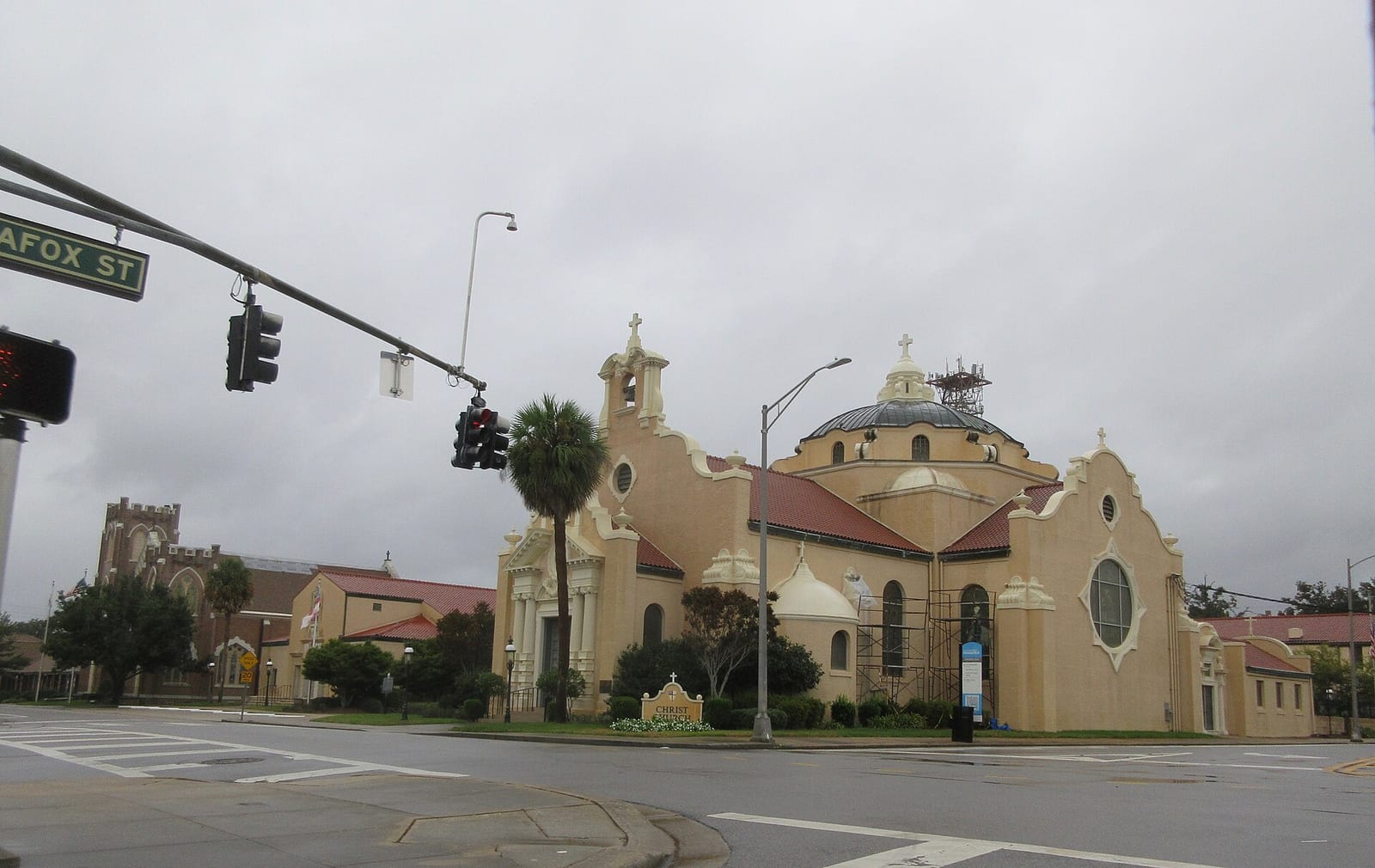
I moved to Pensacola on military orders. Most of my neighbors didn't. On my street alone there's a retired teacher from Ohio, a remote software developer who traded a big-city rent payment for a mortgage, and a nurse who transferred here for one of the two big hospital systems. The military built this town's reputation, but it stopped being the whole story a long time ago.
I'm a retired Air Force officer and a Realtor who has made 11 PCS moves. I know exactly what it feels like to research a city from a thousand miles away and wonder which websites are lying to you. So this guide runs on numbers with named sources and dates, not adjectives. Where the data is fuzzy, I say so. Where the news is bad (insurance, hurricanes, wages), I lead with it instead of burying it.
Whether you're a family chasing A-rated schools, a retiree chasing warmth, a remote worker chasing arbitrage, an investor chasing rents, or a sailor with orders in hand: this is the whole picture as of August 2026.
Is Pensacola, FL a good place to live in 2026?
For most people, yes, with two honest caveats. Pensacola gives you Gulf beaches, no state income tax, a typical home value around $264,000 (Zillow ZHVI, mid-2026), and a two-county metro of roughly 538,900 people (USAFacts, 2024) that keeps adding jobs. The caveats: homeowners insurance runs about twice the national average, and hurricanes are a genuine, recurring risk. If you can budget for both, the math here works.
The lifestyle case is easy to make. Gulf Islands National Seashore protects 18-plus miles of sugar-white quartz sand minutes from downtown. Palafox Street was named one of the American Planning Association's "10 Great Streets in America" back in 2013 and has only gotten better: monthly Gallery Nights close the street for festivals, the Saenger Theatre hosts symphony and touring Broadway, and the Blue Wahoos play Double-A baseball in a waterfront ballpark regularly ranked among the best settings in the minors.
The financial case is more nuanced, and that's most of what this guide is about. Cheap-ish houses plus expensive insurance plus zero income tax nets out close to the national average for most households, but the details depend enormously on where you buy and what you earn. Let's get into it.
Who is actually moving to Pensacola, and why?
Five groups, roughly: military families on orders, retirees, remote workers, in-state Floridians priced out of bigger metros, and investors chasing rents that BAH keeps stable. The metro holds about 538,900 people (USAFacts, 2024), and the growth engine is Santa Rosa County: up 40.4% since 2010, one of Florida's fastest-growing counties (Census estimates).
The county-level numbers tell the story. Escambia County (Pensacola proper and everything west) stood at roughly 333,834 people in 2025, up from 321,905 in the 2020 census. Santa Rosa County jumped from about 188,000 in 2020 to roughly 211,115 in 2025 (World Population Review / Census estimates). Nearly all of that Santa Rosa growth is pouring into Pace and Navarre, where subdivisions are going up faster than the roads that serve them.
Why here? The short version: it's the affordable stretch of Florida coast. You get real Gulf beaches without Tampa or Sarasota prices, no state income tax, and an economy that added jobs in 2025-26 while most of Florida shed them. The military connection also means the region is unusually welcoming to newcomers: everyone here is from somewhere else, so nobody treats you like an outsider.
What is the job market like in Pensacola?
Steady rather than spectacular. Metro unemployment ran 4.8% in December 2025 (seasonally adjusted) and 5.2% in February 2026 (12th-lowest of Florida's 25 metros), and Pensacola added about 1,100 jobs year-over-year through February 2026, one of only nine Florida metros gaining jobs while the state lost 36,700 (state LMI/BLS). The catch: mean hourly wages of $28.18 sit about 16% below the $33.54 national figure (BLS OEWS, May 2025).
The private-sector anchor is Navy Federal Credit Union, the region's largest private employer, with a 440-acre campus in Beulah that has absorbed roughly $1 billion of investment since 2003. The company's own target was nearly 10,000 team members by 2026; treat that as Navy Federal's projection rather than a verified headcount, but the scale is real, and so are the shift-change backups on Nine Mile Road.
Healthcare is the other pillar. Baptist Health Care opened a $650 million, 10-story, 268-bed hospital campus at Brent Lane and I-110 in September 2023 (WUWF/Baptist), and Ascension Sacred Heart operates roughly 560-plus beds plus the regional children's hospital. Aviation maintenance is growing fast: ST Engineering is building out a 655,000-square-foot, four-hangar MRO complex at the airport, projected to support 1,700-plus jobs at full build-out (that's the projection, not current employment). And there's a quieter tech layer: UWF's Center for Cybersecurity is an NSA/DHS National Center of Academic Excellence and the Southeast regional hub, branding this "Florida's Cyber Coast," while IHMC does world-class AI and robotics research from downtown. The University of West Florida itself hit a record 15,601 students in Fall 2025.
If you're a remote worker bringing a national salary, flip that wage gap around: you're earning 16% above the local market while paying local prices. That trade is the single best financial argument for moving here.
How much does a house cost in Pensacola in 2026?
It depends on the source and, more importantly, the side of the metro. Zillow's typical value for the city of Pensacola is $264,116, down 3.6% year-over-year (ZHVI, mid-2026); sold medians run from $280,000 (Movoto) to $337,450 (Houzeo, July 2026) depending on methodology. Santa Rosa suburbs run the mid-$300Ks to high-$400Ks, and the beaches go up from there.
| Area | 2026 Price Benchmark | Source & Vintage |
|---|---|---|
| ZIP 32505 (west Pensacola) | $149,512 | Zillow ZHVI, 2026 |
| ZIP 32514 (Ferry Pass / UWF) | $226,330 | Zillow ZHVI, 2026 |
| ZIP 32506 (southwest, near NAS) | $244,154 | Zillow ZHVI, 2026 |
| Pensacola (city, typical value) | $264,116 | Zillow ZHVI, mid-2026 (−3.6% YoY) |
| ZIP 32501 (near downtown) | $272,013 | Zillow ZHVI, 2026 |
| ZIP 32526 (Beulah) | $281,747 | Zillow ZHVI, 2026 |
| Pace | ~$333,000 sold median | Houzeo/Redfin, mid-2026 |
| Cantonment | ~$342K–$350K median | Zillow/Movoto, July 2026 |
| Navarre | ~$424,000 typical value | Zillow, 2026 |
| Gulf Breeze | $478,658 typical value | Zillow ZHVI, 2026 |
| Perdido Key (mostly condos) | $622K–$925K listing medians | Coldwell Banker, 2026 (mix-dependent) |
| Navarre Beach | $874,000 sold median | Movoto, May 2026 |
Two notes on reading that table honestly. Perdido Key's range is wide because the market is condo-dominated and the median swings with what happens to be listed. And downtown Pensacola proper has no clean public benchmark; condos there trade well above the nearby 32501 figure. Every one of these areas gets a full profile on this site, and if you're comparing new builds against resale, start with the new construction guide: builder incentives have been some of the best deals of 2026.
Is 2026 a buyer's market in Pensacola?
It leans that way: the most buyer-friendly conditions in years. City-wide typical values are down 3.6% year-over-year (Zillow, mid-2026), median days on market run 74-78 (roughly flat), and homes in surrounding submarkets are closing at 98-99% of list. But it's uneven: Pace carried just 1.63 months of supply with sellers still getting 98.9% of ask (Redfin/Houzeo, 2026).
What I see on the ground matches the data: sellers are paying closing costs again, overpriced listings sit and take price cuts, and buyers have time to inspect and negotiate instead of waiving everything. What I don't see is a crash: a 3-4% drift after years of run-up is a softening, not a collapse, and well-priced homes in the school-driven suburbs still move fast.
My advice cuts both ways. Buyers: use the leverage while it exists. Browse what's actually listed on the live MLS search and don't be shy about asking for concessions. Owners: if you're wondering what the softening means for your equity, get a real number from the home valuation page instead of guessing off a Zestimate.
Should you rent first or buy when you move to Pensacola?
My rule of thumb after 11 moves: if you're confident you'll stay three-plus years, buying usually wins; if your horizon is under two years or you've never seen the area, rent first. Rents are reasonable: RentCafe's 2026 averages run $1,513/month for a 2-bedroom (~1,012 sq ft) and $2,024 for a 3-bedroom (~1,416 sq ft).
Renting first buys you knowledge that no website can provide: which commute you can actually tolerate, which side of the county line you want for schools, whether you're a beach person or a downtown person. In a market where prices drifted down 3.6% over the last year, the old panic about "buying before prices run away" doesn't apply; patience currently costs you little.
Buying wins on a longer horizon because principal paydown and Florida's homestead protections stack up fast. Military buyers have the cheat code: zero-down VA financing, which I've broken down in the VA loan field manual. Civilians aren't locked out of low-down-payment options either; the same discipline applies: buy at a payment you can hold through an insurance renewal you won't love.
What is the real cost of living in Pensacola?
Roughly the national average, and be suspicious of anyone who quotes one clean number. The named indexes disagree: Salary.com puts the metro about 5% below the U.S. average, RentCafe about 2% below, and AreaVibes about 6% above (all 2026). Housing is the big saver; insurance is the big offset; zero state income tax tilts the net in your favor.
How it nets out depends on who you are. A remote worker keeping a national salary comes out clearly ahead. A retiree on fixed income gets the tax win but must respect the insurance line; more on that below, because it's the number that surprises every newcomer. A local wage earner faces the honest squeeze: wages 16% under the national mean against roughly average living costs. That's why the two-income household is the regional norm and why the county you choose (and its school math) matters so much.
How do taxes work when you move to Florida?
Three big wins. Florida has no state income tax: pensions, retirement withdrawals, and paychecks all skate. The homestead exemption knocks up to $50,000 off your primary home's assessed value. And Save Our Homes caps your assessed-value growth at 3% a year once homesteaded, with portability if you later move within Florida (FL DOR/Santa Rosa County Property Appraiser).
Now the honest part about property taxes: the cap protects incumbents, not newcomers. When you buy, the assessment resets to market, so your first-year bill will be higher than what the previous long-tenured owner paid. Escambia's total millage ran about 17.54 mills in 2025, and one local analysis pegs a new buyer's first-year bill on a homesteaded $350,000 purchase near $5,424, roughly 1.55% of the price (movewithmomentum.com; single-source, so treat it as a ballpark). Santa Rosa's millage runs lower, and effective rates for long-time owners are far lower thanks to the cap.
File your homestead exemption promptly after closing; it's the single highest-value piece of paperwork in your move. I wrote a full walkthrough, including the military wrinkles, in the homestead exemption guide.
How expensive is homeowners insurance in Pensacola, honestly?
Expensive. This is the number that breaks budgets, so plan for it up front. Pensacola homeowners average $6,198/year (Insurify) to $7,010/year (insure.com) for $300,000 of dwelling coverage, more than double the U.S. norm. Florida overall averaged $8,292 in 2025 versus a $2,948 national average (Insuranceopedia). Budget $500-plus a month and be pleasantly surprised if you beat it.
The good news is the trend finally turned. Citizens (the state-backed insurer of last resort) won regulatory approval for a statewide 8.8% multiperil rate cut for 2026 (wind-only down 5.5%), and its policy count has fallen to roughly 336,000, down 76% from the October 2023 peak, as private carriers return. State Farm filed for a 10% statewide cut and Florida Peninsula for 8.4% (Citizens/Insurance Journal, 2025-26). Cheaper? Yes, relatively. Cheap? No.
Practical rules: get an actual quote on a specific house before you write the offer, not after inspection; ask for the wind-mitigation report; and understand that construction year and roof condition drive quotes more than anything else you control. The full breakdown, including how carriers treat newer builds versus older housing stock, is in the Florida home insurance guide.
Do you need flood insurance in Pensacola?
Maybe, and you need to know before you offer. About 22% of Pensacola properties carry FEMA Special Flood Hazard Area-level risk (First Street), and inside an SFHA, flood insurance is mandatory with any federally backed mortgage. Costs range widely: roughly $130-$450/year in low-to-moderate zones, around $1,300 in moderate-risk areas, and thousands per year on high-risk waterfront like Bayou Texar or Pensacola Beach.
The flood zone is the first thing I pull on any listing I show: before the school zone, before the roof age. Hurricane Sally put around five feet of water in parts of downtown in 2020, and the properties that flooded versus the ones that stayed dry were sometimes a block apart. Elevation is destiny here. I've mapped the whole thing (which zones mean what, what they cost, and where the surprises hide) in the flood zone guide for homebuyers.
Halfway through the guide. Want the version for your exact situation?
I moved here on military orders; most of my clients didn't. Retiree, remote worker, growing family, investor, or PCS orders in hand: tell me your budget, timeline, and what matters most, and I'll tell you which three areas to look at first. No pressure, no spam, no obligation.
How are the schools in Pensacola?
It's a two-district story, and the county line is the plot. Santa Rosa County earned an A district grade from the Florida DOE for 2024-25 (its fourth straight year), while Escambia County earned a B, also its fourth straight (FLDOE via WEAR). At the school level, Santa Rosa posted 15 A campuses, 9 B, 5 C, and 1 F; Escambia posted 16 A, 18 B, 16 C, and 3 D.
That district-wide A is the single biggest school-driven reason families pick Pace, Gulf Breeze, or Navarre and accept the longer commute and higher price. But read the school-level numbers again: Escambia has sixteen A-rated campuses of its own. If you shop school-by-school instead of district-by-district, you can land an excellent Escambia school at a five-figure discount to the Santa Rosa equivalent. That's one of the most underused moves in this market. (I haven't verified individual campus grades for 2024-25 in this guide; check the FLDOE results for the specific schools you're zoning into.)
For higher ed, UWF's record 15,601 students (Fall 2025) and Pensacola State College's roughly 9,491 (2024-25, Univstats) mean real college-town amenities, and a steady tenant pool if you're buying investment property near either campus.
Where should you live in Pensacola? A neighborhood match by profile
Match the area to your life, not to a generic "best neighborhoods" list. The shorthand: A-rated schools point you to Pace, Gulf Breeze, or Navarre; beach living to Perdido Key or Navarre Beach; walkable character to East Hill or downtown; maximum value to Cantonment, Milton, or west Pensacola; acreage to the northern reaches of Santa Rosa or Okaloosa.
Best for families chasing A-rated schools
Pace is the volume play: roughly $333K sold medians (Houzeo/Redfin, mid-2026), new construction everywhere, and the district-wide A. Gulf Breeze is the premium version at a $478,658 typical value (Zillow, 2026) with a small-town peninsula feel. Navarre splits the difference around $424K and adds the beach twenty minutes from your driveway.
Best for beach living
Perdido Key is the quiet, condo-dominated western option: listing medians span $622K-$925K depending on the mix (Coldwell Banker, 2026), so shop unit-by-unit. Navarre Beach posted an $874K sold median (Movoto, May 2026) for a true toes-in-sand address. Budget honestly for wind and flood coverage on either.

Best for walkability and character
East Hill is the classic: bungalows, canopy oaks, coffee shops, and bay breezes, walkable to parks and Bayview. For the downtown orbit, East Pensacola Heights puts you five minutes from Palafox with water on three sides; nearby ZIP 32501 carries a $272,013 typical value (Zillow, 2026), though renovated homes and downtown condos trade well above it.
Best on a budget
West Pensacola's ZIP 32505 is the metro's cheapest benchmark at $149,512 typical value, with 32514 near UWF at $226,330 (Zillow, 2026), both fertile ground for first-time buyers and investors who inspect carefully. Cantonment (~$342K-$350K medians, July 2026) buys newer construction near the Navy Federal campus, and Milton is the most affordable way to stay inside Santa Rosa's A-rated district.
Best for acreage and elbow room
North of Pace and Milton, Santa Rosa still sells genuine land; the growth wave hasn't fully priced it out yet. Further east, Crestview in Okaloosa County is the established value-and-acreage play for people working the Eglin corridor who'd rather have a shop and a yard than a beach view.
What should military families know about moving to Pensacola?
Four installations anchor the region: NAS Pensacola ("the Cradle of Naval Aviation," home of the Blue Angels), NTTC Corry Station (cryptology and cyber training), NAS Whiting Field (primary and helicopter flight training), and Saufley Field. Your 2026 BAH under MHA FL064: an E-5 with dependents draws $1,863/month, an E-6 $2,235, an O-3 $2,271 (DoD DTMO).
The scale is bigger than visitors expect. NAS Pensacola alone hosts 126 tenant commands with 16,000-plus military and roughly 7,400 civilian personnel, and regional defense activity generates an estimated $7.8B-$8.3B in economic impact, over half the two-county economy (figures from regional defense-advocacy and EDA sources, so treat them as estimates). Whiting Field has $98.5M appropriated for a new helicopter hangar, a decent proxy for how permanent the training mission is.
On the money: at 2026 rates, an E-6's $2,235 covers the payment on roughly a $280-310K home, which is exactly the Pace, Milton, and East Pensacola price band. Run your own grade on the BAH calculator, and if it's your first purchase, the first-time military homebuyer guide walks the whole sequence. One quirk worth knowing: if your orders read Eglin or Hurlburt Field, you're in MHA FL023, where an E-5 with dependents draws $2,433 (DoD DTMO, 2026), materially higher, and your house hunt shifts east to Fort Walton Beach, Niceville, or Crestview; see the Eglin base guide.
And the perk nobody budgets for: Blue Angels practices over NAS Pensacola are free to watch from the National Naval Aviation Museum, with Wednesday autograph sessions, and the Homecoming Air Show lands November 6-7, 2026. For the full orders-to-closing playbook (timelines, TLE, the 90-day sequence), read the dedicated PCS to Pensacola guide.

What is the weather really like, and how bad is hurricane risk?
Humid subtropical, honestly delivered: summer highs in the upper 80s to low 90s with humidity peaking in August, and 64-68 inches of rain a year, among the rainiest cities in America (Bestplaces/US Climate Data). October through April is the payoff: mild, bright, and the reason porches exist. On hurricanes: roughly 8 direct hits since 1975 (HurricaneCity). That's the honest baseline.
Two storms define local memory. Ivan (2004) came ashore just west as a Category 3 with 10-15 feet of surge and roughly $13 billion in U.S. damage, the region's benchmark disaster. Sally (2020) was "only" a slow Category 2 that dropped 20-30 inches of rain, pushed record surge and about five feet of water into parts of downtown, caused around $2 billion in damage, and knocked a barge into the Pensacola Bay Bridge, severing the metro's main artery for months (NHC/FDEP/WUWF).
Locals don't pretend the risk away; they price it in. Newer construction built to modern wind code, attention to elevation and flood zone, a real insurance budget, and a June-through-November supply kit are just part of the operating cost of living somewhere this beautiful. Most years, nothing happens. You plan for the year something does.
What about healthcare, the airport, and getting around?
Better than the metro's size suggests. Baptist Health Care runs a brand-new 268-bed campus (opened September 2023), Ascension Sacred Heart operates roughly 560-plus beds plus the regional children's hospital, and Naval Hospital Pensacola serves military families. Pensacola International (PNS) posted a record year with roughly 3.04 million passengers in 2025 (airport-reported) across 7 airlines. Average one-way commute: about 19.9 minutes versus 26.4 nationally (Bestplaces).
PNS punches above its weight: roughly 23-28 nonstop destinations led by Atlanta, Dallas, and Charlotte, with the airport touting some of the lowest average fares in the country (flypensacola.com). For remote workers and frequent flyers, a 15-minute drive to a real airport is a quality-of-life line item most big metros can't match.
The catch is bridges. The Pensacola Bay Bridge ("Three Mile Bridge") is the toll-free, six-lane artery between downtown and Gulf Breeze. The Garcon Point Bridge ($2.30 with SunPass, $2.75 by plate, September 2025 rates) is the shortcut from the Gulf Breeze peninsula up to Milton and I-10; I've paid that toll enough times to tell you it's worth every cent when US-98 jams. And US-98 through Gulf Breeze and Navarre is the region's notorious single-corridor squeeze; the Bayshore-to-Portside widening was slated to wrap in Spring 2026, though I'd verify current status before counting on it. Test-drive your exact commute at 7:30 a.m. and 5 p.m. before you sign anything; the Nine Mile Road corridor at Navy Federal shift change is a different road than at noon.
What are the honest downsides of living in Pensacola?
Six real ones, and if any is a dealbreaker, better to know now. In rough order of financial impact: insurance costs, hurricane exposure, the five-month summer, below-average local wages, road infrastructure straining under growth, and a metro that splits sharply in two along the county line. Here's each one straight.
- Insurance. Even with rates finally falling, $6,200-$7,000/year on a $300K home (Insurify/insure.com, 2026) is more than double the national norm, and flood coverage stacks on top near water.
- Hurricanes. Roughly 8 direct hits since 1975; Ivan and Sally each did billion-dollar damage within living memory, and about 22% of city properties carry real flood risk (First Street).
- Summer. Low-90s highs, oppressive humidity June through September, afternoon thunderstorms most July days, and 64-68 inches of annual rain. You will live indoors in August.
- Wages. The mean hourly wage runs 16% below national (BLS, May 2025). Escambia's median household income (~$61K, 2017-21 ACS) trails Santa Rosa's (~$92K, a 2024 figure); the vintages differ, but the direction of the gap is not in doubt.
- Infrastructure strain. US-98 and the bridges are single points of failure (Sally proved it), and growth in Pace and Beulah has outrun roads and school capacity.
- The two-tier metro. School grades, incomes, and prices split hard along the county line. Where you buy matters more here than in most metros, which is half the reason this guide exists.
What should you do in your first 90 days after moving to Pensacola?
Knock out the paperwork, protect the house, and learn the place, in that order. The list below is the sequence I give every arriving client, military or civilian. None of it is glamorous; all of it saves money or misery. The homestead filing and the insurance review are the two with real dollars attached, so front-load those.
- Swap your driver's license and register vehicles: Florida residency has real tax value; make it official early.
- File your homestead exemption as soon as you close on a primary residence: up to $50,000 off assessed value plus the 3% Save Our Homes cap. The step-by-step guide is here.
- Audit your insurance while you can still shop calmly: confirm wind coverage, deductibles, and whether your flood zone requires (or merely recommends) a policy.
- Pull your flood zone and elevation info even if you rent; it tells you how your street behaves in a storm.
- Build the hurricane kit before you need it: water, batteries, documents, a plan for where you'd go. June through November is the season.
- Get a SunPass transponder if you'll ever cross Garcon Point ($2.30 vs $2.75 by plate) or drive Florida's toll roads.
- Test your real commute at rush hour, especially anything touching US-98, the Three Mile Bridge, or Nine Mile Road.
- Enroll the kids and verify school zoning yourself: zones shift as fast as the subdivisions go up; confirm with the district, not the listing.
- Register to vote and update your addresses: banks, USPS, subscriptions, and (for military) DEERS and your BAH paperwork.
- Go watch a Blue Angels practice from the National Naval Aviation Museum; it's free, and it's the fastest way to feel like you live here.
Moving to Pensacola, on orders or not?
I'll tell you which three areas fit your budget and life, with real numbers. Call or text (850) 266-5005 | Book a 15-minute call | Search live listings
Sources and References
- USAFacts: Pensacola MSA population (2024)
- World Population Review: Santa Rosa County estimates (2025)
- BLS OEWS: Pensacola wages (May 2025)
- Zillow: Pensacola home values (ZHVI)
- Zillow: Gulf Breeze home values
- Zillow: Navarre home values
- Houzeo: Pensacola housing market (July 2026)
- Movoto: Pensacola market trends
- Redfin: Gulf Breeze housing market
- RentCafe: Pensacola average rents (2026)
- Salary.com: Pensacola cost of living
- AreaVibes: Pensacola cost of living index
- Santa Rosa County Property Appraiser: homestead exemptions
- Insurify: Pensacola homeowners insurance (2026)
- Insure.com: Pensacola homeowners insurance
- Citizens Property Insurance: 2026 rate decrease
- First Street: Pensacola flood risk
- Florida DOE: 2024-25 school grades results
- UWF Newsroom: record Fall 2025 enrollment
- WUWF: new Baptist Health Care campus (2023)
- WEAR: ST Engineering airport expansion
- Studer Community Institute: Navy Federal growth
- National Hurricane Center: Hurricane Sally report
- National Weather Service: Hurricane Ivan (2004)
- HurricaneCity: Pensacola hurricane history
- Pensacola International Airport: record passengers
- U.S. Navy Blue Angels: 2026 show schedule
- DoD Defense Travel Management Office: 2026 BAH rates
- Military Friendly NWF: regional defense economic impact
- Bestplaces: Pensacola climate and commute data
Frequently Asked Questions
Is Pensacola, FL a cheap place to live?
Housing is cheaper than most coastal metros (Zillow put the city's typical home value at $264,116 in mid-2026), and Florida has no state income tax. But homeowners insurance runs roughly twice the national average, which claws back much of the savings. Named cost-of-living indexes place the metro anywhere from 5% below to 6% above the U.S. average, so call it roughly average overall.
What salary do you need to live comfortably in Pensacola?
There is no official figure, but rents anchor the math: RentCafe's 2026 averages are $1,513/month for a 2-bedroom and $2,024 for a 3-bedroom. Under the standard 30%-of-income guideline, that implies a household income of roughly $60,000-$81,000 to rent comfortably. Buyers should also budget $6,000-$7,000 a year for homeowners insurance on a typical house.
Is Pensacola a good place to retire?
It is a strong retirement market: no state income tax, a homestead exemption of up to $50,000, two major hospital systems, beaches, and a large veteran community. The trade-offs are hurricane preparation and insurance premiums that run well above the national average. Many retirees target Gulf Breeze, Pace, or Perdido Key depending on budget.
Is Pensacola good for remote workers?
Yes, the arbitrage is real. Local mean wages run about 16% below the national average (BLS, May 2025), so a national salary goes far against local home prices. Pensacola International served roughly 3 million passengers in 2025 with 7 airlines and nonstops to hubs like Atlanta, Dallas, and Charlotte, which keeps fly-in work practical.
How bad are hurricanes in Pensacola, really?
The area has taken roughly 8 direct hurricane hits since 1975 (HurricaneCity), including Ivan in 2004 and Sally in 2020, both billion-dollar disasters. Most years pass without a strike, but you must build the risk into your budget and your buying decisions. Start with the flood zone guide before you make an offer.
Should I live in Escambia County or Santa Rosa County?
Santa Rosa carries an A district grade from the state (four straight years) and higher household incomes; Escambia is graded B and offers cheaper housing, the urban core, and shorter commutes to NAS Pensacola and downtown jobs. Families chasing schools usually cross the county line to Pace, Gulf Breeze, or Navarre. Everyone else should weigh commute and price first.
Do I need flood insurance in Pensacola?
If the home sits in a FEMA Special Flood Hazard Area and you have a federally backed mortgage, flood insurance is mandatory, and First Street estimates about 22% of Pensacola properties carry that level of risk. Premiums range from $130-$450 a year in low-to-moderate zones to thousands on high-risk waterfront. Check the zone before you write an offer, not after.
Can you live in Pensacola without a car?
Realistically, no. This is a driving metro. The upside is an average one-way commute of about 19.9 minutes versus 26.4 nationally (Bestplaces). East Hill and the downtown core are the walkable exceptions, where you can reach restaurants, parks, and Palafox Street on foot.
When is the best time of year to move to Pensacola?
October through April is the pleasant season: mild, dry, and easy for moving trucks. Summer is peak moving season because of military rotations and school calendars, so expect more competition for rentals and movers in June and July. House hunters often find more negotiating room in late fall and winter.
Is Pensacola just a military town?
No, though defense is the anchor, generating an estimated $7.8B+ in regional impact per area economic-development groups. Navy Federal Credit Union is the region's largest private employer, and healthcare, aviation maintenance, cybersecurity, and the University of West Florida diversify the base. Most of your neighbors will be civilians.